How to use the Rejection Sensitivity Stack
If you only have a minute: The Rejection Sensitivity Stack is a free reflection tool from Glad We Talked®. It helps you see why some rejections hit so hard. You build a stack of layers on a plate. Each layer is something that can make rejection feel heavier, such as masking, being misread or being compared with others. A coloured bar beside the stack, your Window of Connection, shows how much room you have for connection. You need a free account to use it, and only you can see what you save. It is a reflection tool, not a diagnosis.
Sign in to open the stack · Join free
What is rejection sensitivity?
Rejection sensitivity is when being left out, criticised or let down, or even the chance of it, hits hard and fast. You feel it in your body as well as your mind.
Some people call it rejection sensitive dysphoria, or RSD. It is not a medical diagnosis. It is a name for something many people live with.
Rejection is rarely one moment. It stacks. With continued stress, rejection, miscommunication and not fitting in, our capacity for connection gets smaller. That is when dysregulation comes in.
A strong reaction does not mean you are too much. It often means a lot has stacked up.
What does the stack show?
The stack shows the layers that sit under a reaction to rejection. Each layer sits on your plate. Its colour shows which group it comes from.
Some layers come from what happened before. Some are everyday things. Some come from how your brain and body work, who you are, or the world around you. Together they explain why one small moment can feel so big.
Welcome
Welcome
This is a gentle tool for noticing what sits under a big reaction to rejection. There is no right way to use it. Go slowly.
What is rejection sensitivity?
It is when being left out, criticised or let down, or even the chance of it, hits hard and fast. Some people call it rejection sensitive dysphoria, or RSD.
Rejection stacks
It is rarely one moment. Old hurts, small hurts and the world around you pile up, layer on layer. This tool helps you see the layers.
Before you start
It is a reflection tool, not a diagnosis. Only you can see what you save. Take a break whenever you need to.
How do I use the stack?
- Open the cards. Tap the cards icon under your plate. The cards slide up.
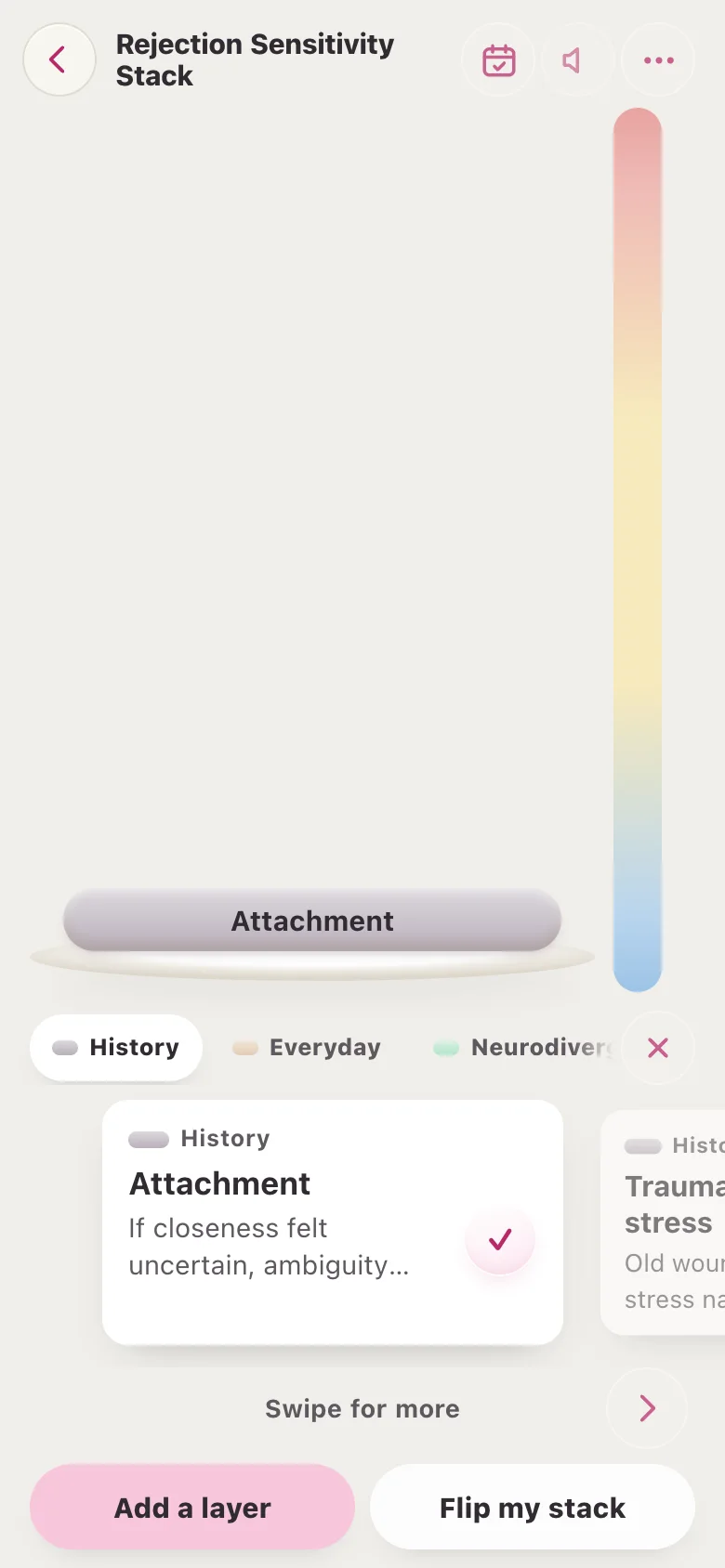
- Add a layer. Swipe through the cards, or use the arrows. Tap a card and it lands on your plate as a layer. The cards start with History.
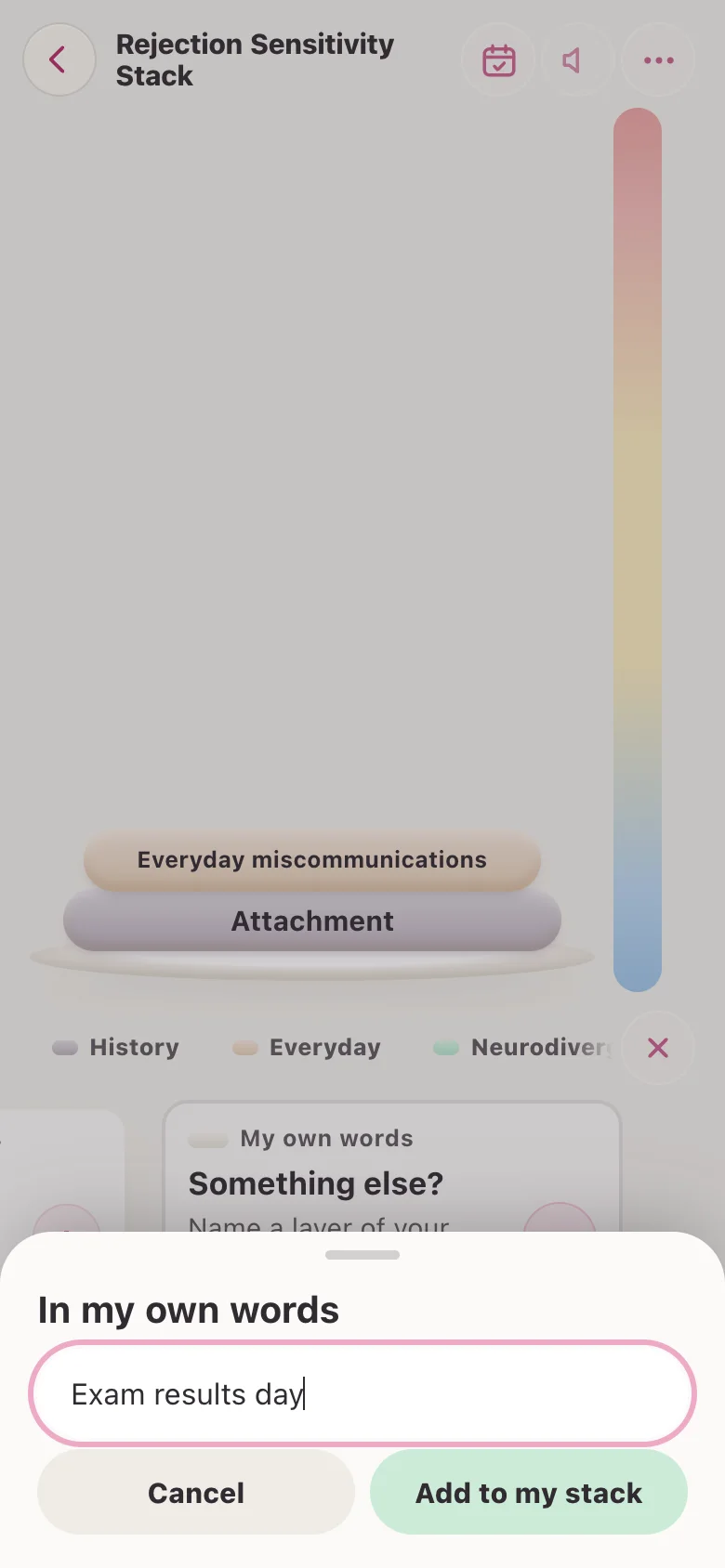
- Add your own words. Nothing fits? Swipe to the last card, Something else, and name a layer of your own.
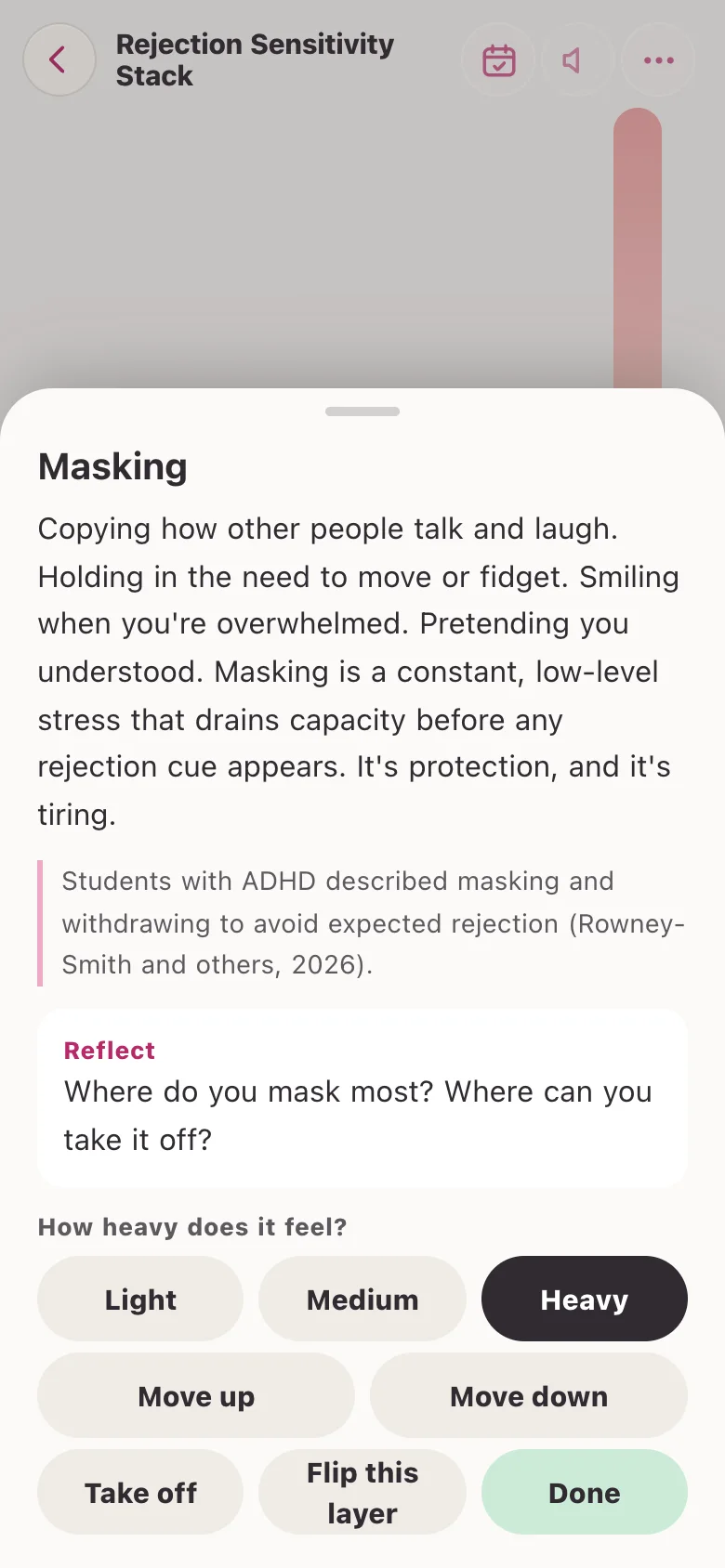
- Tap a layer. Read about it, answer its question and choose how heavy it feels: light, medium or heavy.
- Move a layer. Drag a layer up or down to change the order. Or tap it and use Move up and Move down.
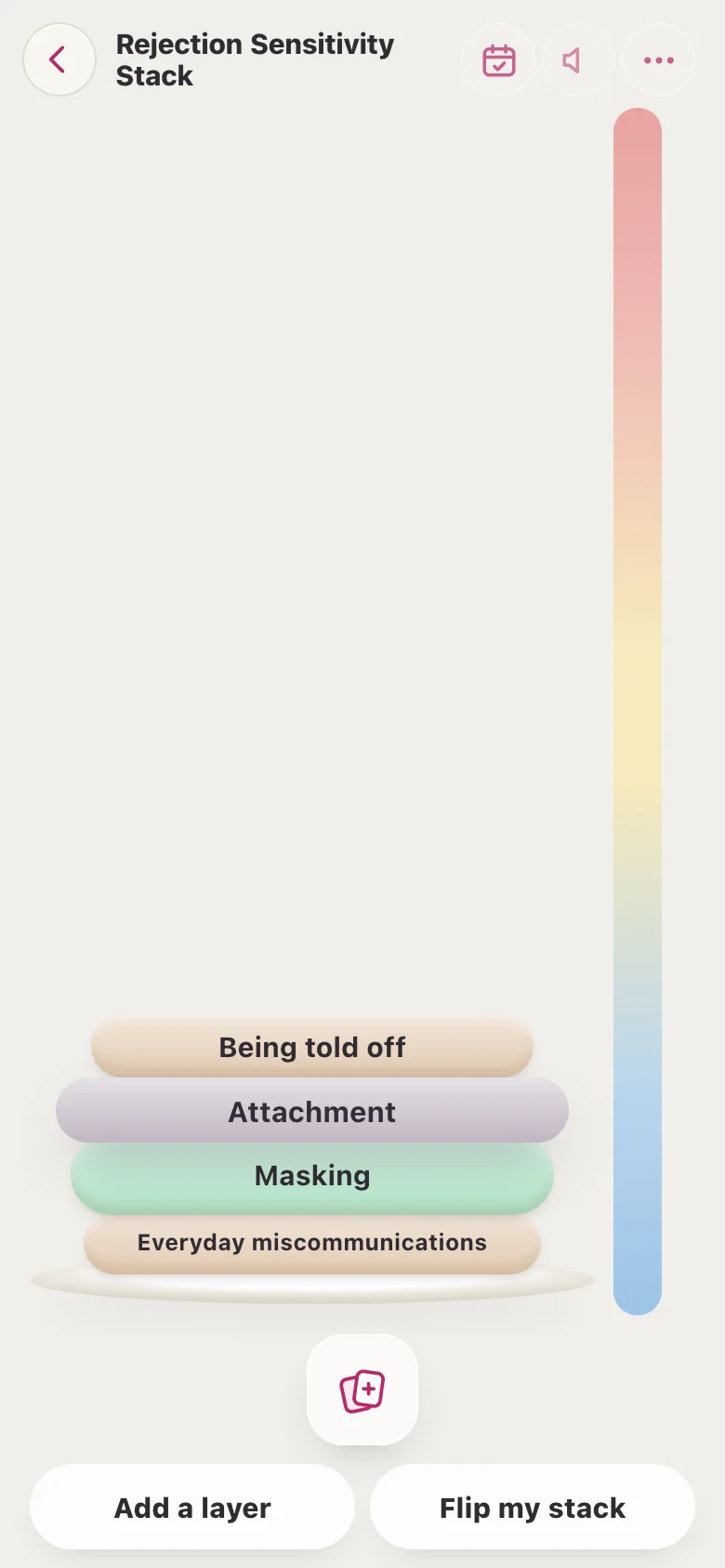
- Take a layer off. Swipe a layer sideways. Or tap it and choose Take off.
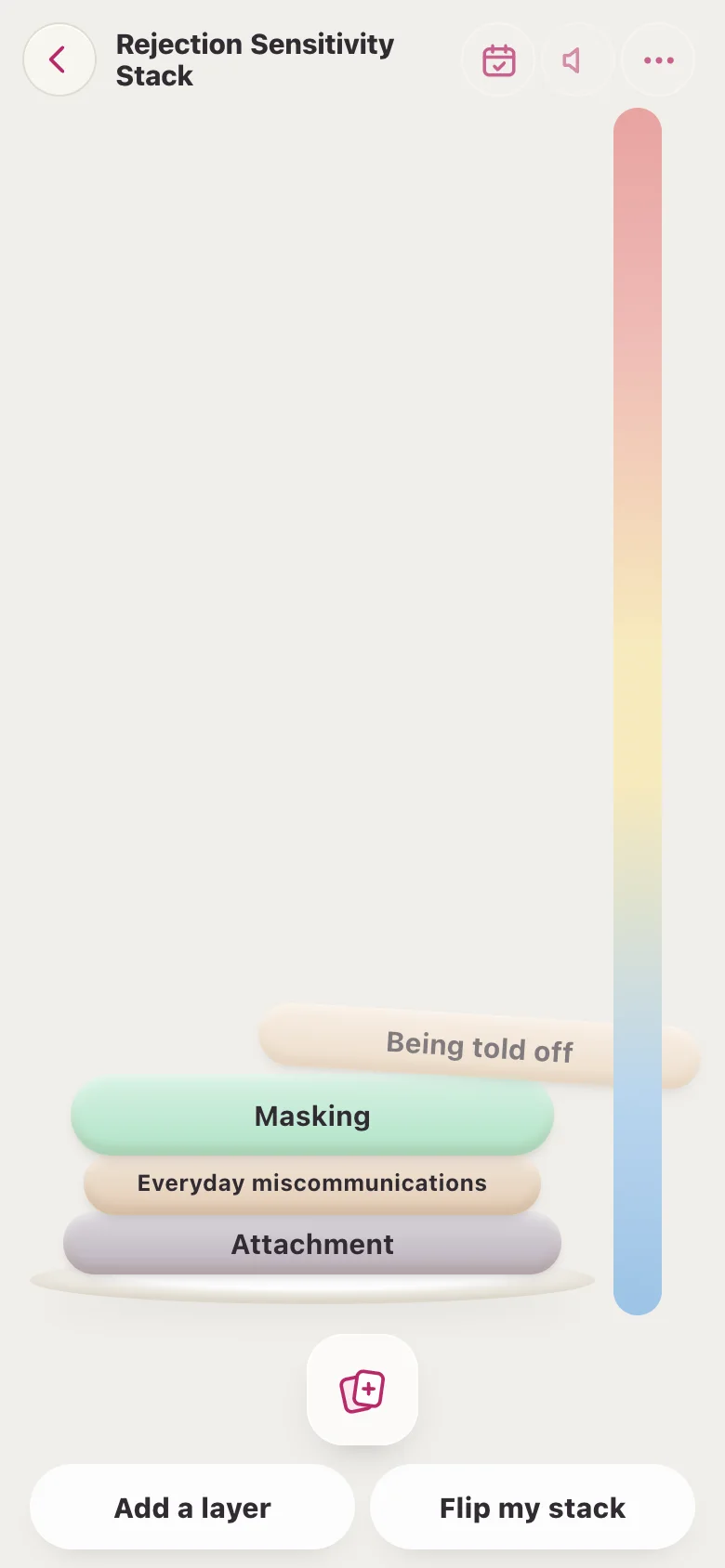
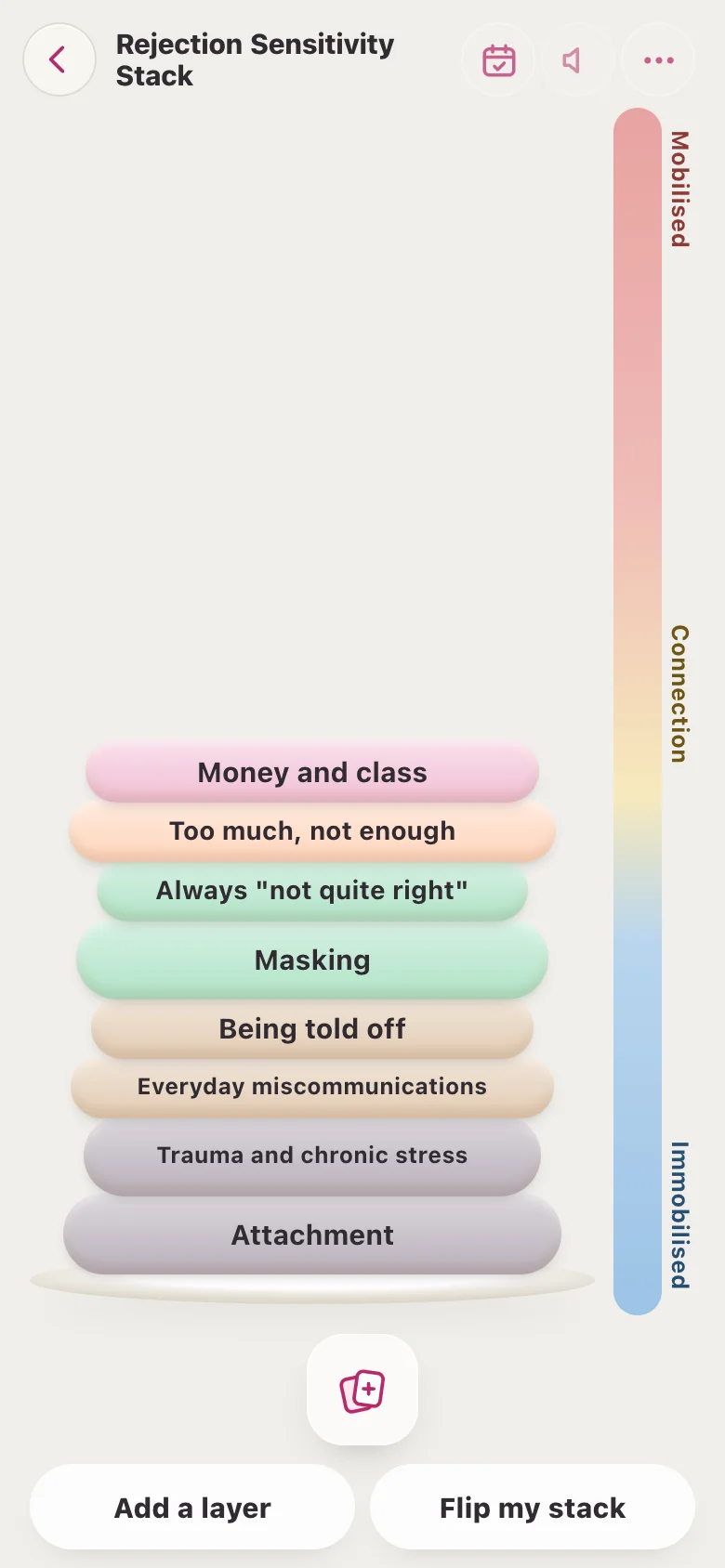
- Watch your Window of Connection. This is the coloured bar beside your stack. Red and blue close in as the stack grows. Drag them to show how it really feels today. Tap the bar to see the names.
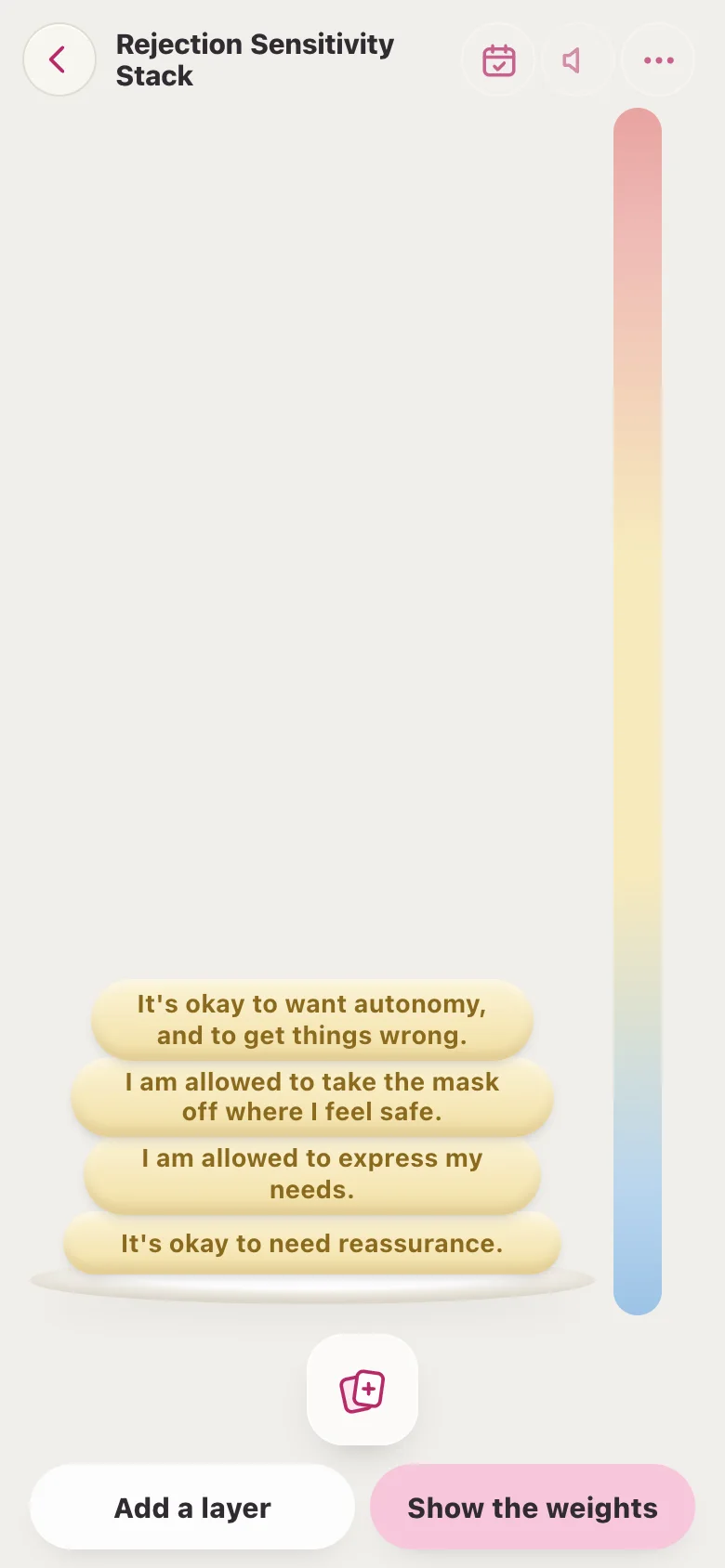
- Tap Flip my stack. Each layer turns over to show what it allows you to feel, such as “I am allowed to express my needs.”
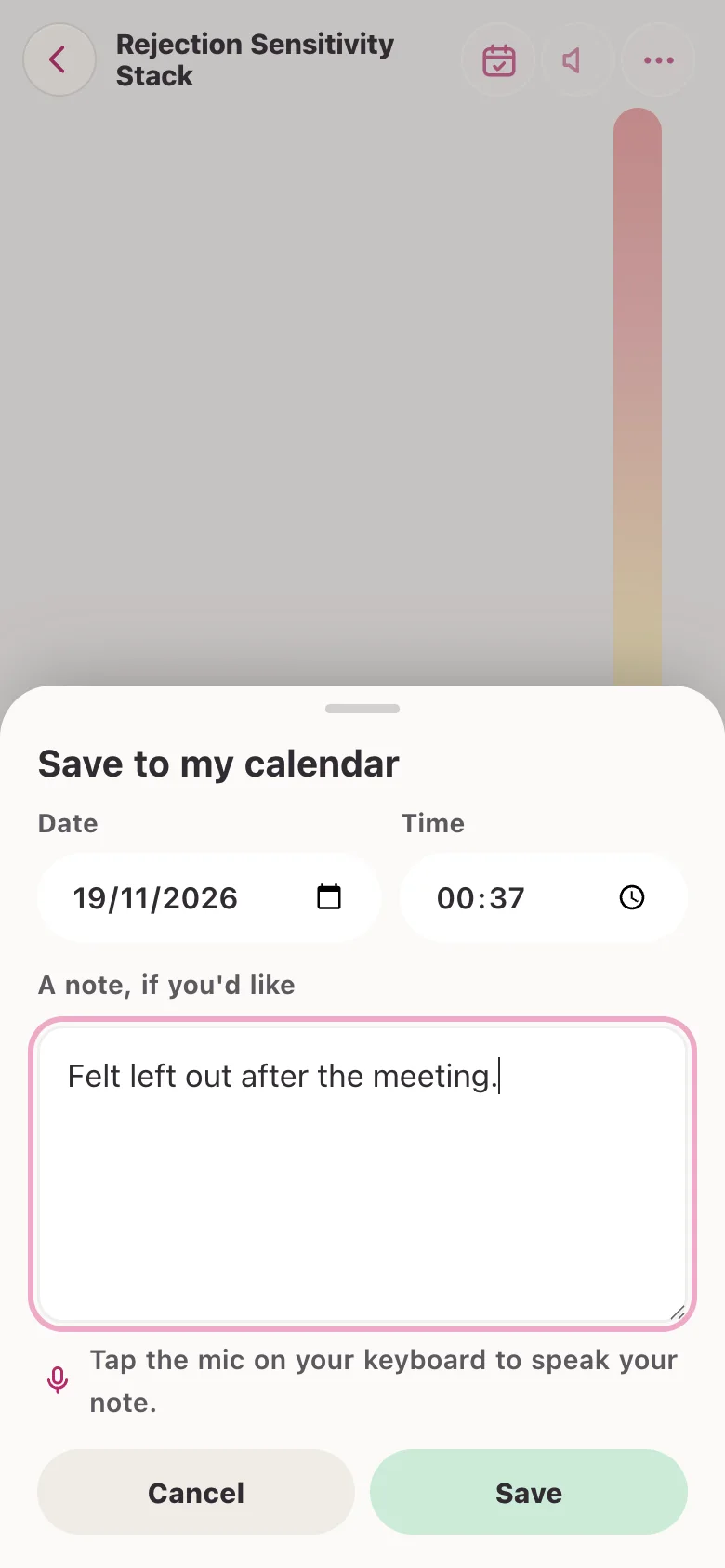
- Save it. Tap the calendar at the top. Choose the day and time, and add a note if you like. You can speak your note with the mic on your keyboard.
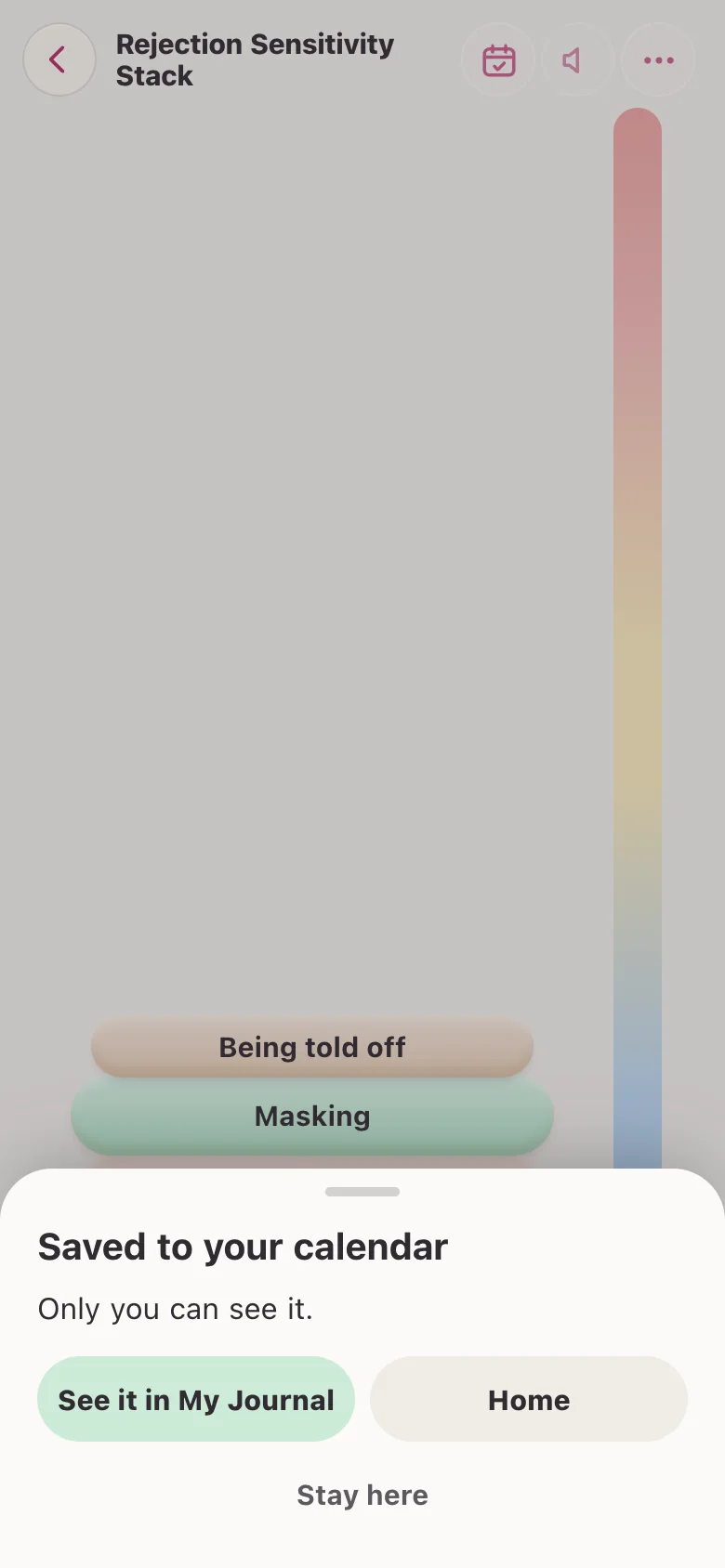
- Choose where to go next. After saving, see it in My Journal, go Home, or stay and keep going. Only you can see your saved stacks.
What else is in the tool?
- Back: The arrow at the top left takes you back to where you were.
- The three dots: Open About this tool. Everything below is in there.
- Easy-read font: A clearer font with more space between letters.
- Keep this tool in Saved: So you can find it again quickly.
- Need support now?: Free UK helplines, any time.
- Start again: Clears your plate. Your saved stacks stay safe.
- Update a saved stack: Open it in My Journal and choose Update this stack. It saves a new one, so your earlier stack stays as it was.
What does the Window of Connection show?
The tall coloured bar beside the stack is your Window of Connection. There are no numbers. It uses three colours.
- Red is mobilised. High energy: fight, flight or fawn.
- Yellow is connection. Relaxed, curious and able to think.
- Blue is immobilised. Low energy: freeze or shut down.
As the stack grows, red and blue close in and the yellow space for connection gets smaller. You can drag red and blue to show how it really feels today.
What are the five card groups?
History
What came before: closeness, stress and what families pass down.
- Attachment
- Trauma and chronic stress
- Intergenerational trauma
- The pull of the familiar
Everyday
Small, common moments. On their own they are tiny. Stacked up, they add weight.
- Everyday miscommunications
- Being told off
- Left on read
- Social comparison
Neurodivergence
How your brain and body take in the world, for example if you are ADHD or autistic.
- Big feelings, fast
- Sensory overwhelm
- Being misread
- Always “not quite right”
- Masking
Identity
Heritage, faith, culture and skin colour, and not always being accepted as you are.
- Too much, not enough
- Questioned to my face
- Between faiths
- Code switching
- Hidden from family
- No room to explore who I am
- Colourism
What made it harder
The world around you, and what it did or did not give you.
- Gender
- Disability
- Money and class
- Little room for feelings
- No safety net
What does Flip my stack do?
Flip my stack turns each layer over. The other side shows what that layer allows you to feel. For example:
- I am allowed to express my needs.
- It’s okay to need quiet, space or a break.
- I am allowed to take the mask off where I feel safe.
- It’s okay to need reassurance.
Who can see my stack?
Only you can see your stacks. Saved stacks are private to your account.
You can delete your saved stacks at any time.
Is it a diagnosis?
The Rejection Sensitivity Stack is a reflection tool, not a diagnosis. A high stack doesn’t mean you’re broken. If it stirs things up, take a breath and come back later, or talk to someone you trust.
If you need help now, go to Crisis support for free UK helplines.
Frequently asked questions
Is the Rejection Sensitivity Stack a diagnosis?
No. The Rejection Sensitivity Stack is a reflection tool. It won’t tell you whether you have RSD, ADHD or anything else. It helps you notice what is stacking up, so you can be kinder to yourself.
Who can see my stack?
Only you. Stacks you save go to My Journal and are private to your account. You can delete them whenever you like.
Is the Rejection Sensitivity Stack free?
Yes. The Rejection Sensitivity Stack is free. You need a free Glad We Talked® account to use it, so your stacks can be kept private to you.
Do I need to be ADHD or autistic to use it?
No. Anyone who feels rejection deeply can use the Rejection Sensitivity Stack. Some cards talk about ADHD and autism because many neurodivergent people find rejection hits hard. You only add the cards that fit you.
Can I add a layer in my own words?
Yes. If none of the cards fit, you can name your own layer and add it to your stack.
Why are there no numbers on the Window of Connection?
The Window of Connection shows how it feels, not a score. Red is mobilised, yellow is connection and blue is immobilised. You can drag red and blue to match how today really feels.
What if the Rejection Sensitivity Stack brings up difficult feelings?
Take a break whenever you need to. The Rejection Sensitivity Stack isn’t crisis support. If you need to talk to someone now, our crisis support page lists free UK helplines, including Samaritans on 116 123.
Related pages
- How I’m Wired: a free strengths and needs reflection tool for adults
- Free resources: more free tools, guides and check-ins
- Finding My Steady: our programme on the nervous system and communication
- Crisis support: free UK helplines if you need help now