What Music Unlocks in Us
When House Was God: On Music, Movement, and Holding the Aftermath
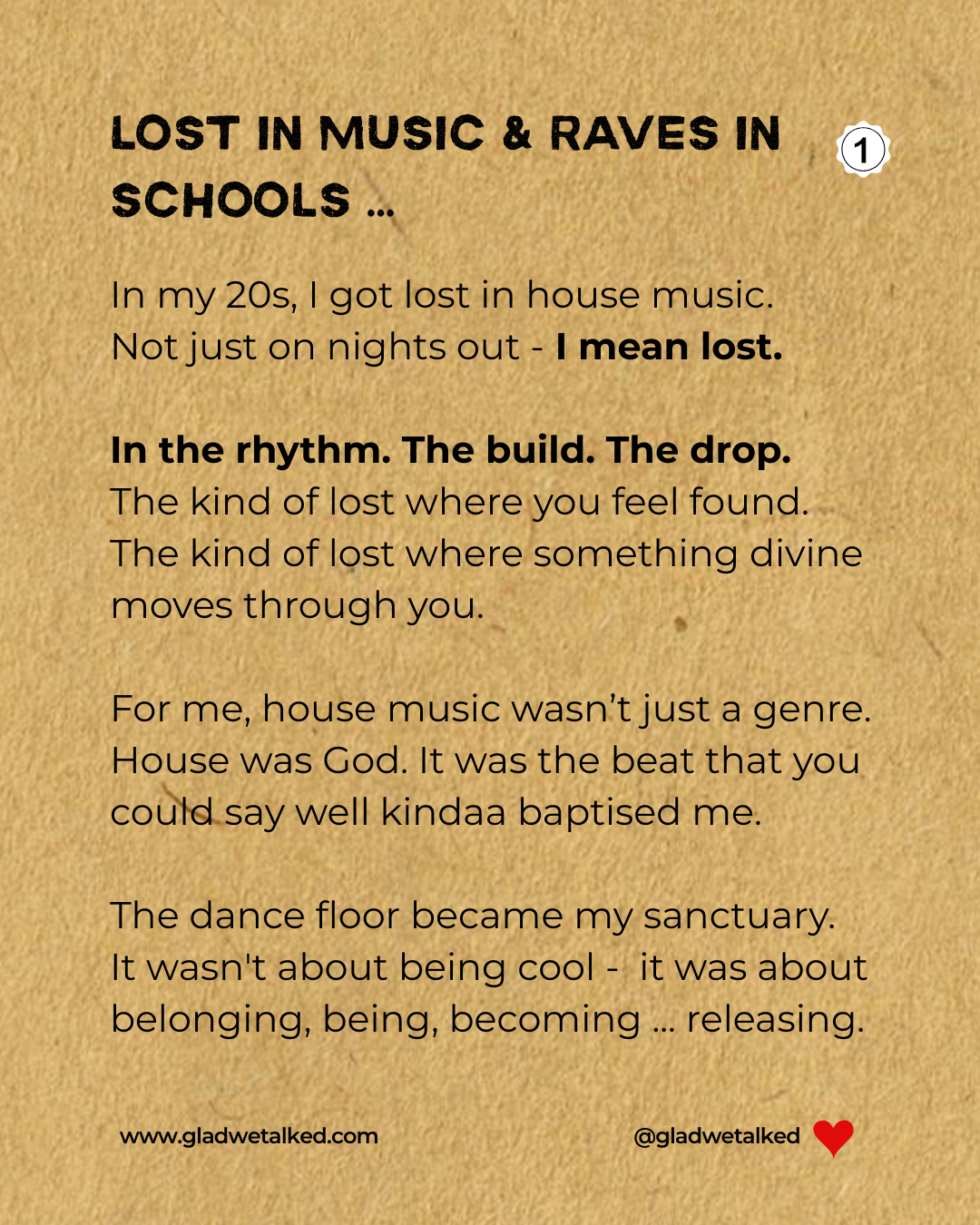
In my 20s, I got lost in house music.
Not just on nights out – I mean lost. In the rhythm. The build. The drop.
The kind of lost where you feel found.
The kind of lost where something divine moves through you.
For me, house music wasn’t just a genre.
House was God.
It was the beat that you could say baptised me. The dance floor became my sanctuary.
It wasn’t about being cool – it was about becoming.
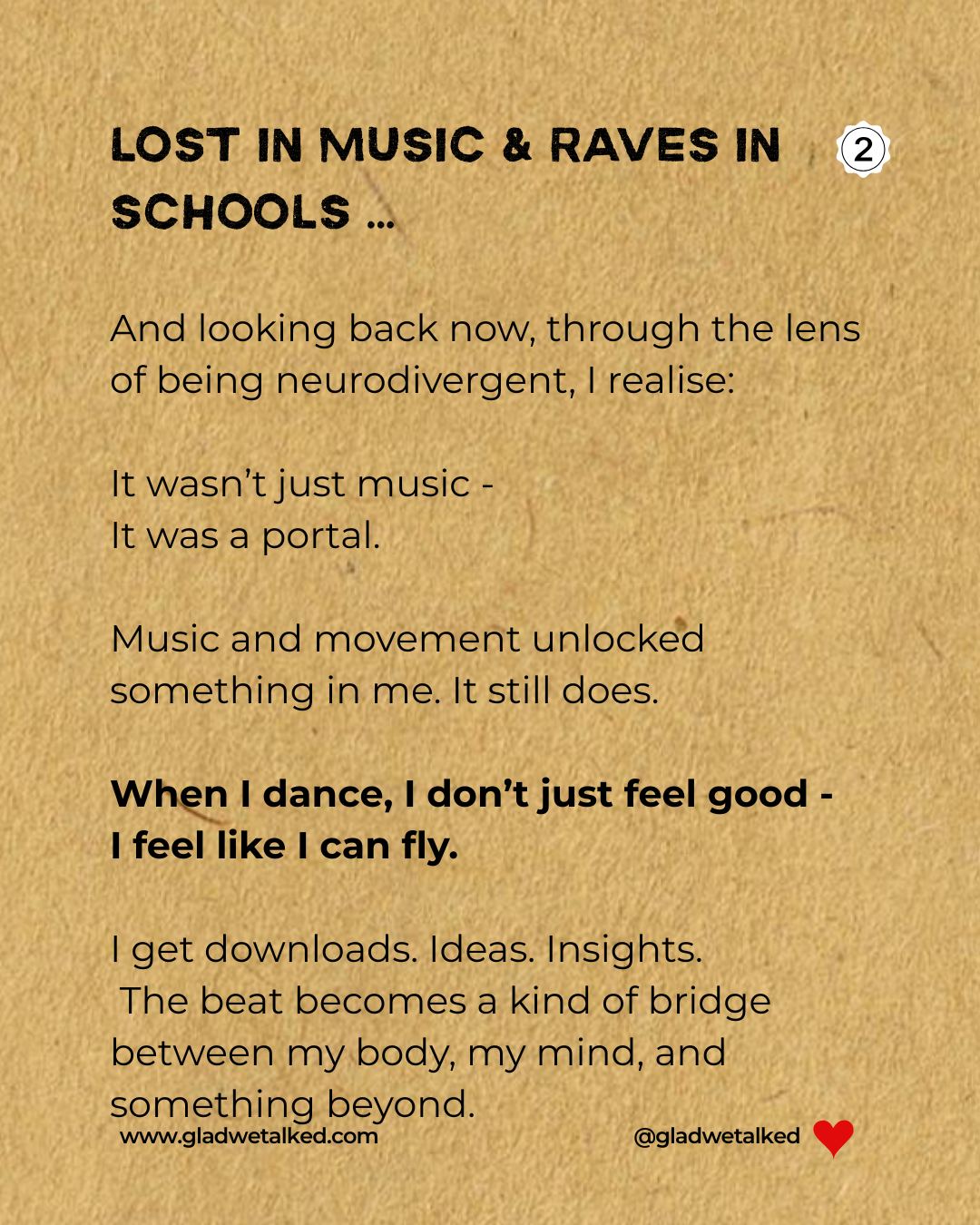
And looking back now, through the lens of being neurodivergent, I realise:
It wasn’t just music –
It was a portal.
Music and movement unlocked something in me.
It still does.
When I dance, I don’t just feel good –
I feel like I can fly.
I get downloads. Ideas. Insights.
The beat becomes a kind of bridge between my body, my mind, and something beyond.
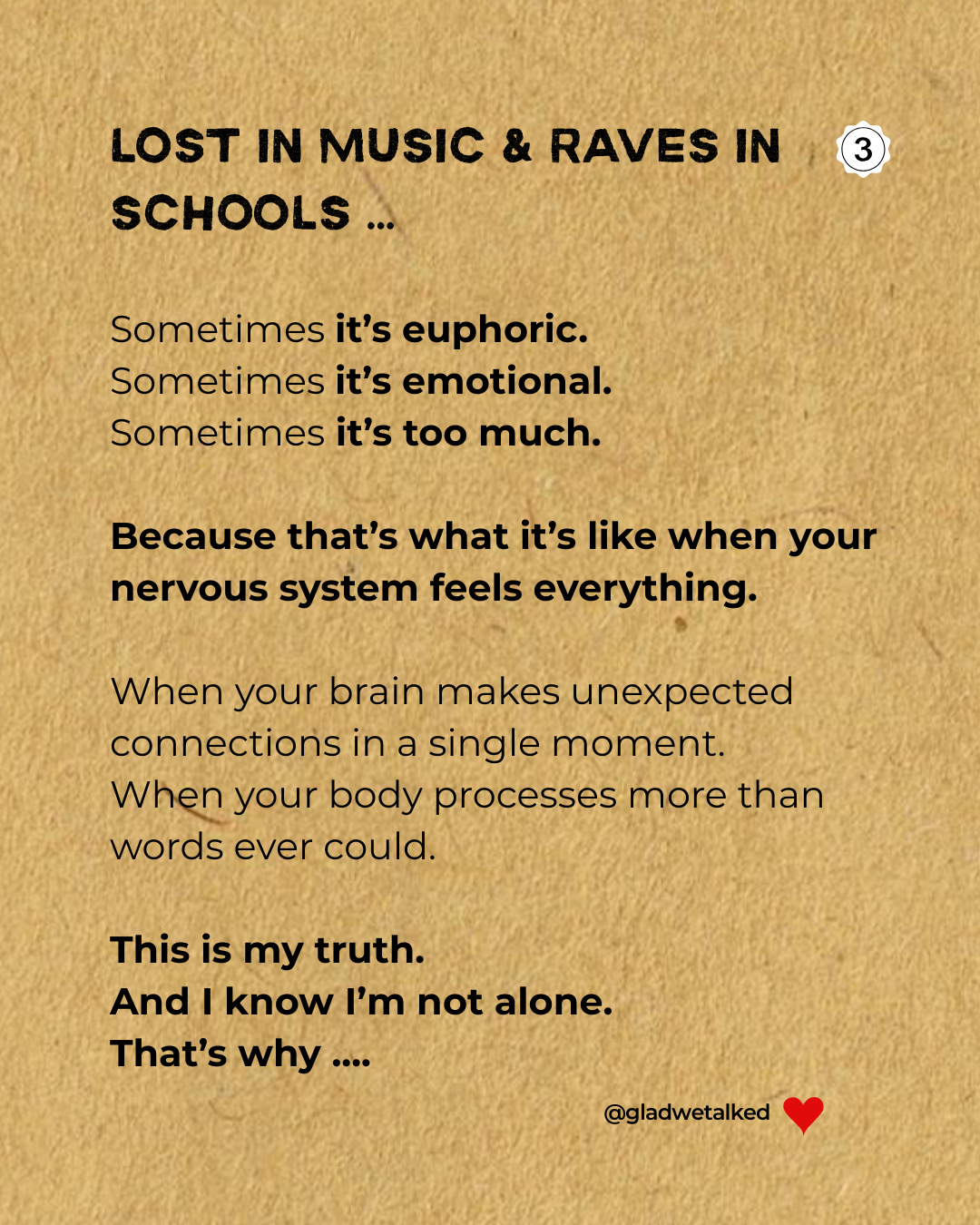
Sometimes it’s euphoric.
Sometimes it’s emotional.
Sometimes it’s too much.
Because that’s what it’s like when your nervous system feels everything.
When your brain makes unexpected connections in a single moment.
When your body processes more than words ever could.
This is my truth.
And I know I’m not alone.
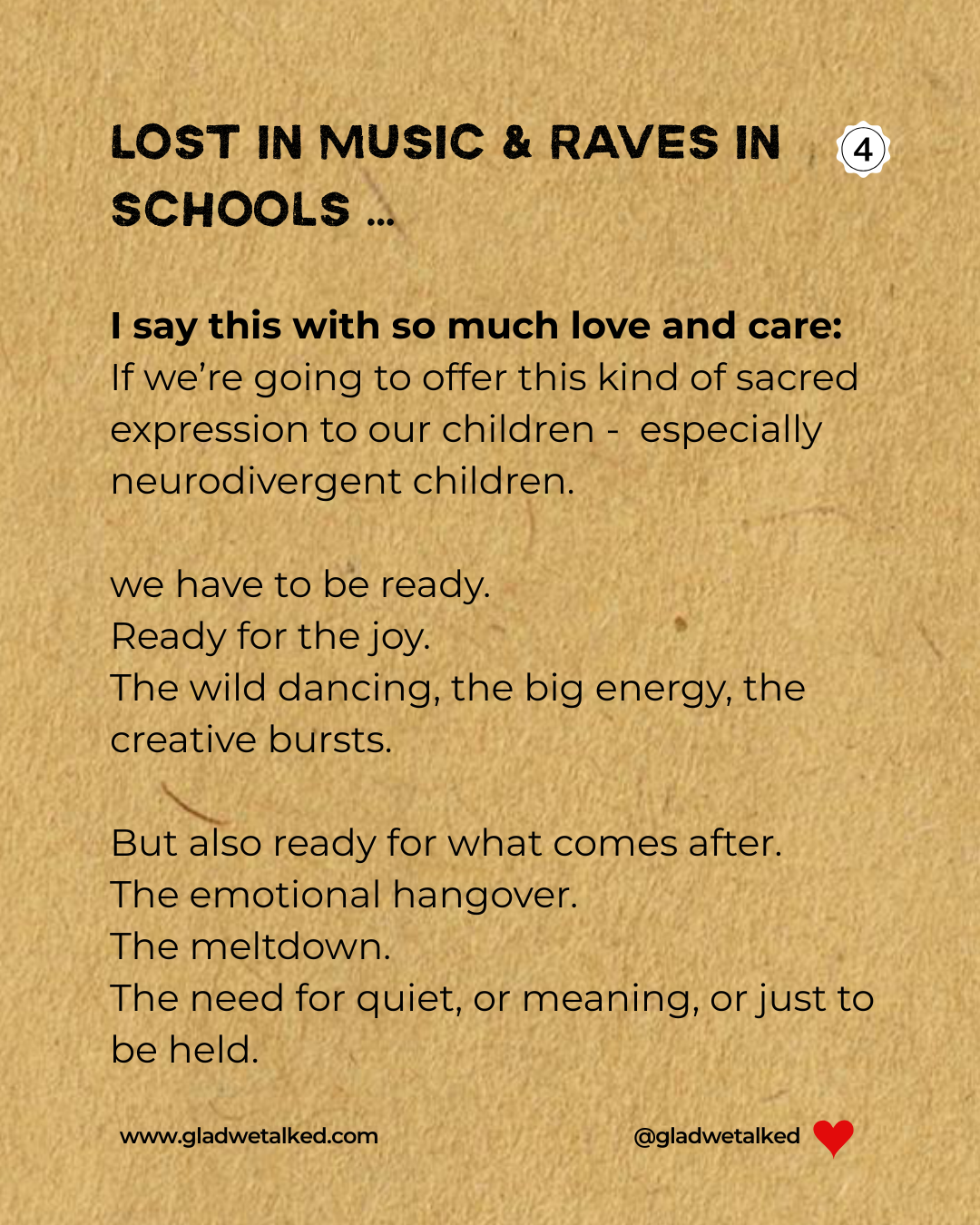
That’s why I say this with so much love and care:
If we’re going to offer this kind of sacred expression to our children – especially neurodivergent children –
we have to be ready.
Ready for the joy.
The wild dancing, the big energy, the creative bursts.
But also ready for what comes after.
The emotional hangover. The meltdown. The need for quiet, or meaning, or just to be held.
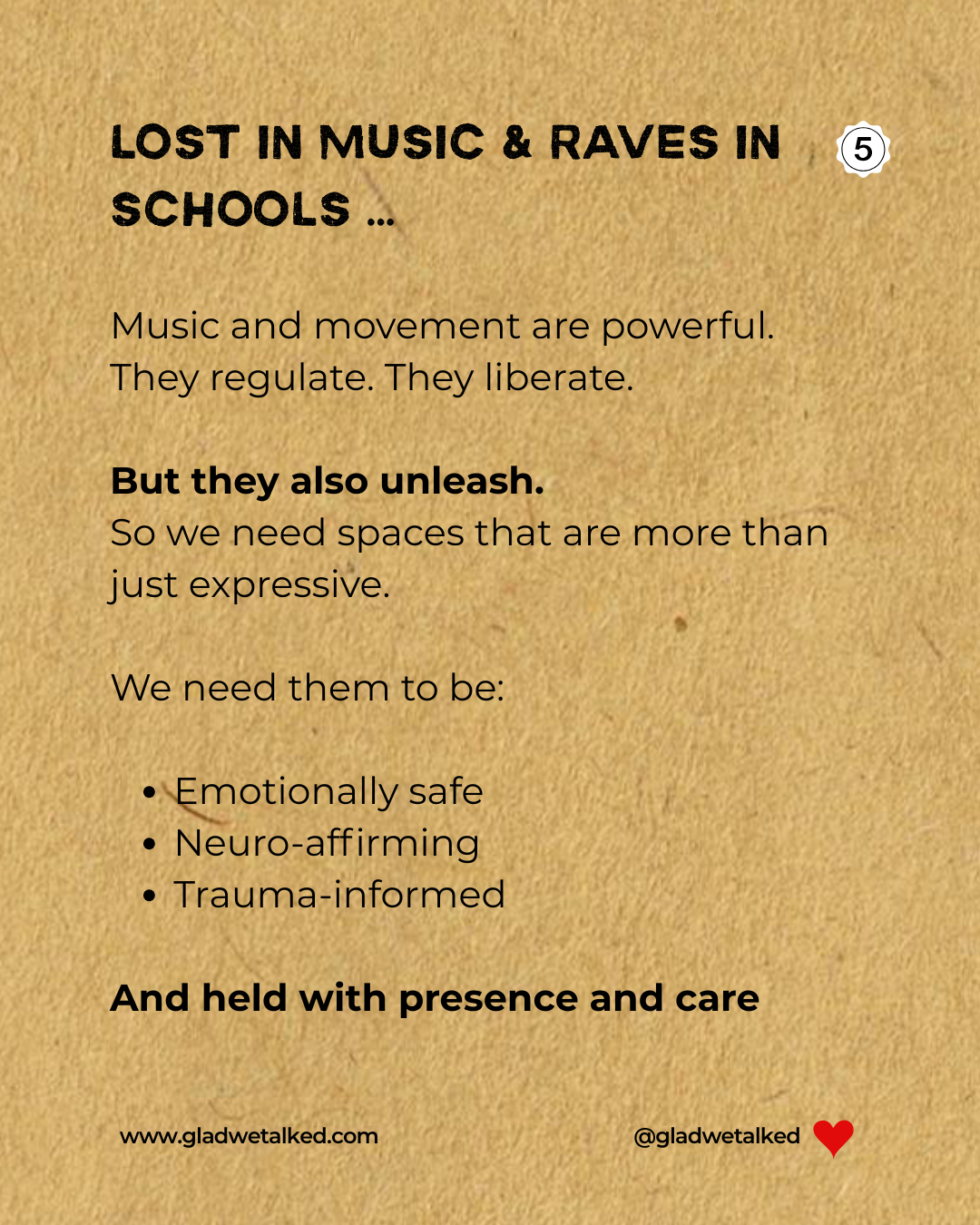
Music and movement are powerful.
They regulate. They liberate.
But they also unleash.
So we need spaces that are more than just expressive.
We need them to be:
Emotionally safe
Neuro-affirming
Trauma-informed
And held with presence and care
Because joy can be overwhelming.
Freedom can be disorienting.
And sometimes, after we fly, we need someone to help us land.
Let’s offer our children not just the dance – but the holding afterwards.
Let’s teach them that their expression is sacred, their ideas are valid, and their sensitivity is strength.
Let’s give them rhythm – and regulation.
Freedom – and safety.
Euphoria – and grounding.
If music is medicine for the neurodivergent soul,
it doesn’t come in teaspoons.
It floods. It flies. It opens floodgates.
I know this in my bones.
When the music moves through me – I soar.
I get ideas, insights, whole visions.
I get so excited, I feel like I can fly.
That’s the beauty of it – and the tenderness.
Because what lifts us … can also unravel us.
So to the parents, friends, loved ones:
If you’re going to invite this kind of expression,
be ready to receive the whole release.
So let’s not just open the portal –
Let’s stay with the release.
Let’s witness it. Honour it.
Make space for what rises – and what follows.